Clarity
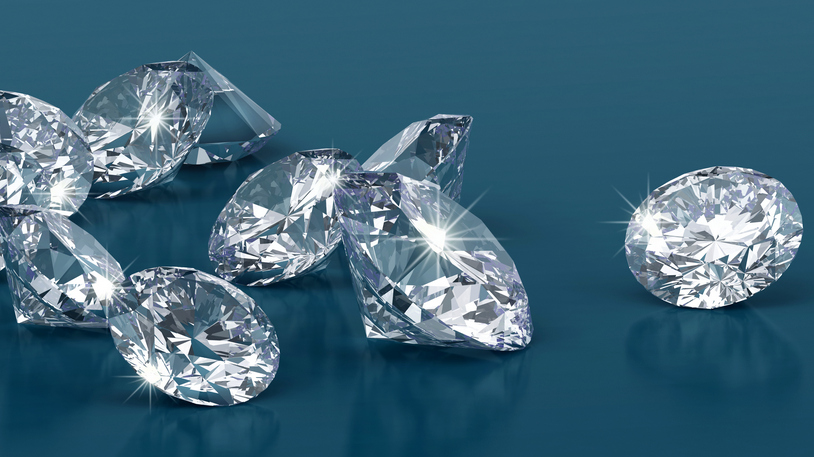
Clarity is the main factor that determines a diamond’s quality. This is what the gem’s ability to refract and reflect light — and therefore, the legendary diamond brilliance — depends on.
There are several special methodologies that can be used to assess diamond clarity. The GIA system is the most common around the world. It grades diamonds on a scale from Fl (completely flawless) to I3 (multiple visible flaws). The Russian assessment system is rather more complex. It also takes into account the gem’s size and number of facets.
Sometimes, the prices set for two visually identical diamonds will be very far apart; the subtle differences between such gems are very hard to spot with a naked eye. To properly determine a diamond’s clarity, experts use a special gemological magnifying glass, which magnifies the image tenfold, allowing minuscule flaws or impurities to be seen. Microscopic cracks and dark or «cloudy» spots within the gem may have very little impact on the diamond’s quality — so long as they are near its edges. If they are central on the diamond, however, they may greatly reduce the diamond’s capacity for transmitting and diffusing light.
Curiously enough, impurities may be a good thing: they prove that the gem is natural rather than grown in a laboratory. Perfectly pure natural diamonds (commonly known as «first water» diamonds) are very rare.
Early this August, ALROSA sold a large, 51.38-carat diamond that was named Dynasty and belonged to an eponymous collection. It was the purest polished diamond in the entire history of Russian jewelry creation.
Related articles